
Detroit Diesel 8V53T two-stroke marine engines are tough legacy workhorses, but their wet exhaust systems can become a serious failure point when corrosion, seawater injection, poor drainage, and saturated insulation are ignored for too long. Before assuming smoke, overheating, or low-power complaints are isolated engine problems, start with the Master Marine Diesel Troubleshooting Guide to separate exhaust restriction, cooling failure, turbo performance issues, and engine-condition problems.
This restoration project documents a severely failed Detroit Diesel 8V53T wet exhaust assembly operating in the Ventura, Santa Barbara, and Channel Islands region. The original non-jacketed steel exhaust tube had been in service for roughly 25 years and was fully perforated in multiple areas, allowing hot exhaust gases, seawater vapor, rust scale, and mineral deposits to contaminate the engine room. Similar survey-level inspection logic is used when evaluating larger Detroit platforms, including this Detroit Diesel 6V92T Marine Engine Survey, where exhaust condition, cooling health, turbo performance, and reliability risk are evaluated together.
Before: Inspecting the Failed 8V53T Wet Exhaust System
The failed system used an older single-wall steel exhaust pipe wrapped in fiberglass insulation. Once that insulation becomes wet, it traps saltwater against the metal and accelerates external corrosion. At the same time, the inside of the pipe is exposed to hot exhaust gas, seawater injection, carbon, and mineral scale.
That combination eventually leads to perforation, internal flaking, backpressure problems, and dangerous exhaust leakage. In severe cases, these failures can overlap with marine diesel exhaust backpressure problems, high exhaust temperature, and overheating under load.
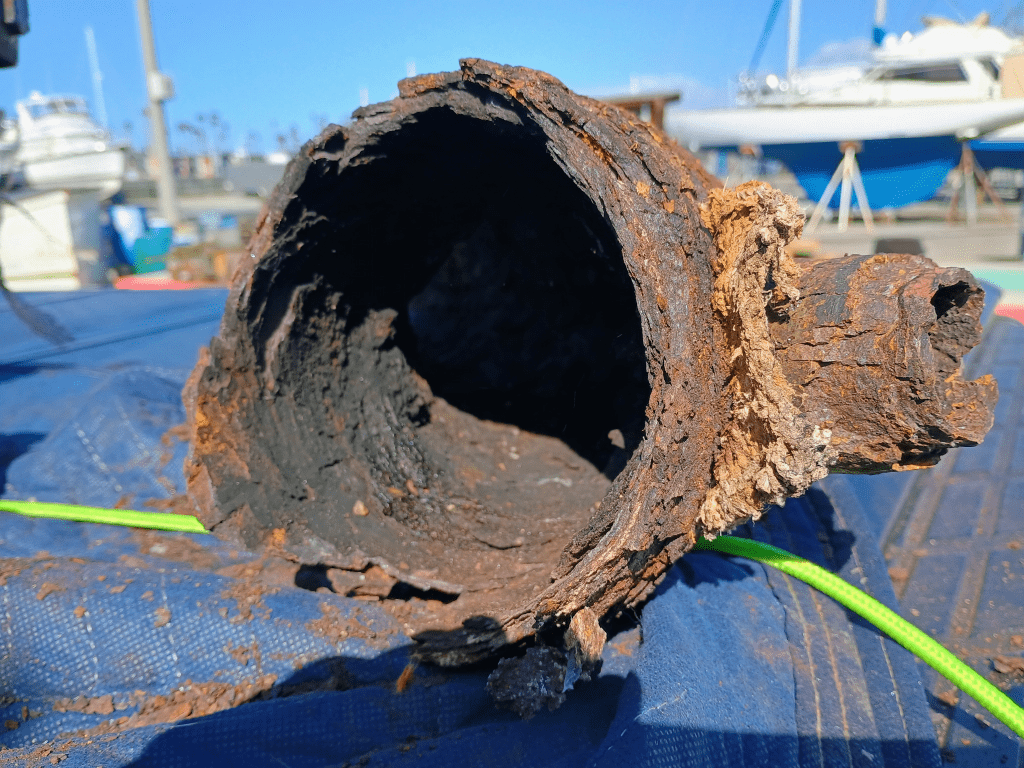
Completely corroded Detroit Diesel 8V53T wet exhaust mixing elbow with perforated steel and heavy rust scale found during Channel Islands Harbor engine room inspection.
The perforated exhaust tube shown above is more than a cosmetic problem. Once exhaust gas escapes into the engine compartment, heat, soot, moisture, and salt vapor can damage wiring, insulation, hoses, mounts, and nearby cooling components. If seawater migrates backward through a compromised exhaust path, the risk can escalate into cylinder water intrusion or hydrolock.
Cooling System Problems Found During Disassembly
Exhaust failures rarely happen in isolation. When the exhaust system is deteriorated, the cooling system is often suffering too. During this 8V53T restoration, the heat exchanger, seawater pump, and raw water circuit all showed signs of long-term neglect.
These findings align closely with common issues covered in the Cooling System Diagnosis Center, especially when raw water restriction, impeller debris, zinc fragments, or mineral buildup affect multiple components at once.
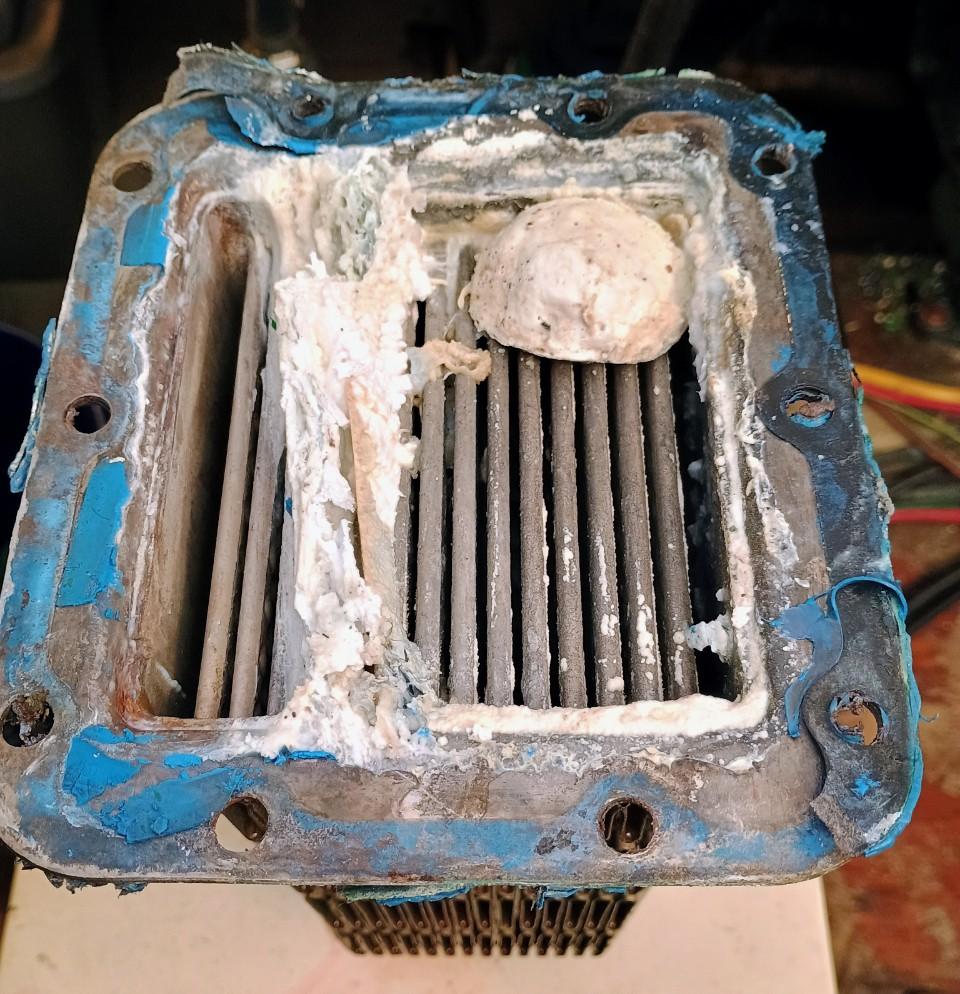
The heat exchanger core was heavily clogged with calcium and salt buildup. This reduces cooling efficiency, increases operating temperature, and lowers the safety margin during cruise operation. A restriction like this can produce symptoms similar to heat exchanger clogging, raw water flow problems, and overheating at idle vs cruise.
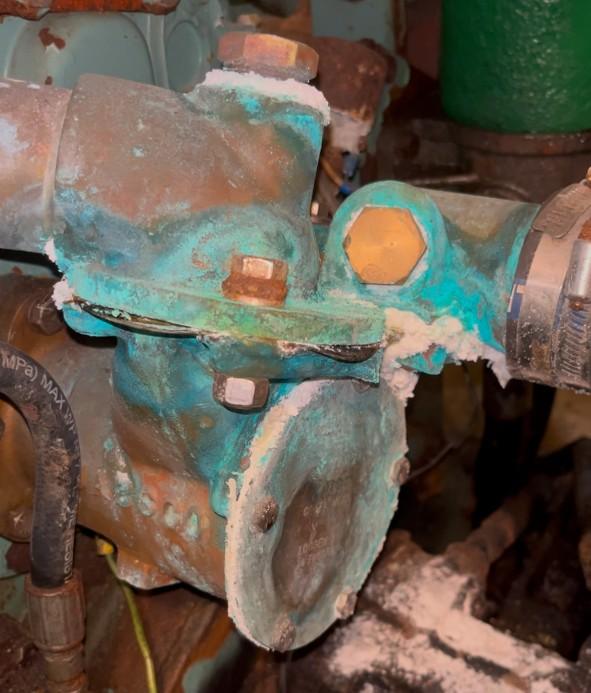
Detroit Diesel 8V53T seawater pump housing with severe corrosion, salt crystallization, and gasket leakage discovered during cooling system inspection.
The seawater pump showed severe corrosion, leakage, and mineral buildup. A pump in this condition may still move some water at idle but fail to maintain proper volume under load. That pattern often points toward seawater pump failure and impeller damage, especially when temperature climbs as RPM increases.
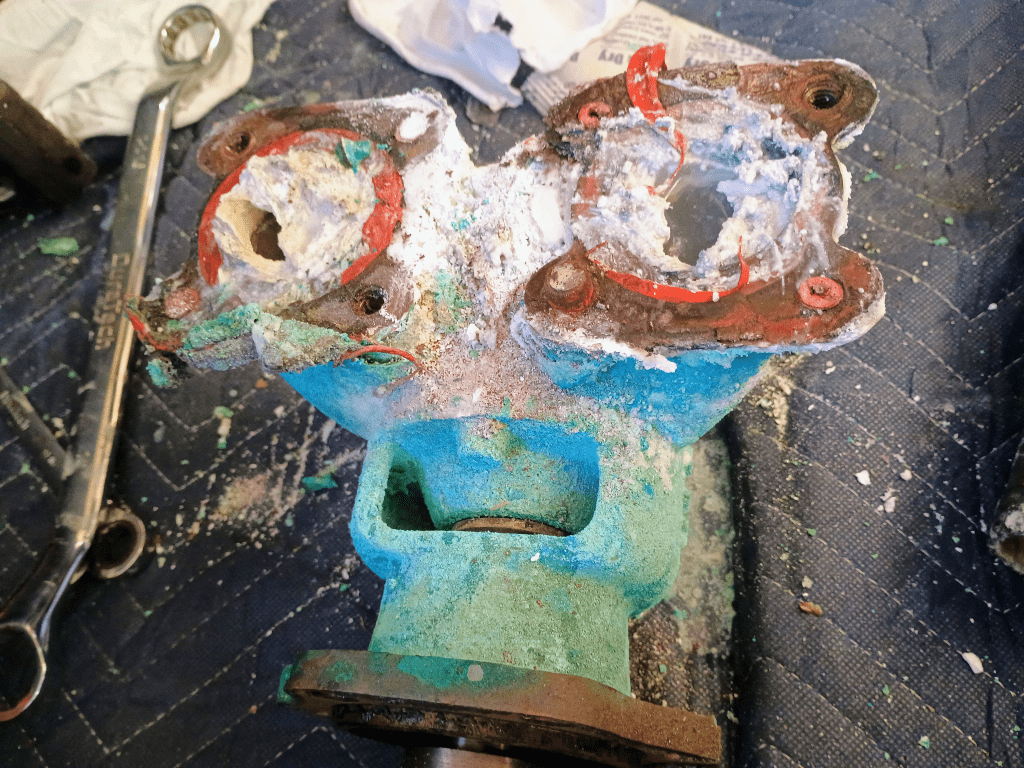
Detroit Diesel 8V53T seawater pump destroyed from corrosion and salt crystal buildup caused by long-term lack of raw water pump maintenance.
Because the cooling circuit and exhaust system work together, a failing seawater pump can contribute to overheated exhaust hose, reduced water injection, elevated engine temperatures, and accelerated exhaust corrosion. When these systems degrade together, a technician should also evaluate aftercooler restriction, turbo lag, and boost pressure under load.
Why the Detroit Diesel 8V53T Exhaust Failed So Severely
The 8V53T is a high-flow two-stroke Detroit Diesel platform. Compared with many four-stroke engines of similar displacement, it moves a large volume of exhaust gas and depends heavily on correct exhaust routing, water injection, backpressure control, and cooling flow.
In this case, the original mild steel pipe was wrapped in insulation that eventually became moisture-saturated. That trapped saltwater against the steel, while the inside of the pipe was attacked by hot exhaust, injected seawater, and acidic condensation. Over time, the system lost structural integrity and became unsafe.
- Water-soaked insulation trapped salt against steel
- Poor drainage held moisture inside low points
- Thermal cycling accelerated scaling and cracking
- Cooling system neglect increased exhaust heat
- Old hoses and clamps reduced system reliability
The result was not just a failed pipe. It was a system-wide reliability issue that could have created loss of power, failure to reach full RPM, abnormal exhaust smoke, and possibly severe internal engine damage if water intrusion occurred.
During: Fabricating the New Wet Exhaust System
The original exhaust assembly was beyond repair, so a replacement system was fabricated to match engine geometry while improving reliability. The new assembly was built with correct routing, reinforced joints, water injection placement, and proper insulation strategy.
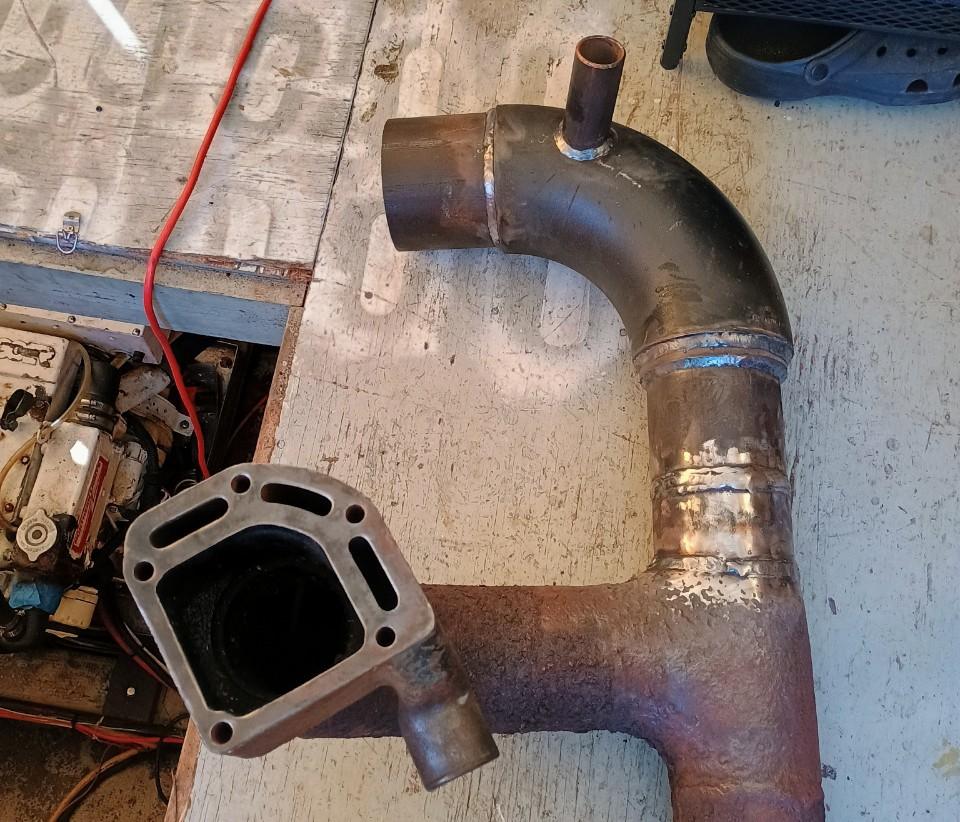
Detroit Diesel 8V53T wet exhaust system during custom fabrication with formed elbows, welded transitions, and water injection layout for marine service.
The fabrication process included pipe fitting, flange alignment, water injection placement, pressure inspection, and final preparation for insulation. Exhaust geometry matters because incorrect routing can increase backpressure, reduce turbo efficiency, and create heat problems. That is why exhaust restoration should be evaluated alongside turbocharger failure symptoms and turbo oil supply and drain problems.
- New formed exhaust sections were fitted to engine geometry
- Reinforced welded joints were added at transition points
- Water injection fittings were positioned for flow and cooling
- Flanges were matched for proper alignment
- The assembly was cleaned and checked before installation
New Silicone Wet Exhaust Hoses and Clamp Hardware
Wet exhaust hose condition is critical because the hose must handle heat, vibration, seawater, pressure pulses, and engine movement. Old rubber hose can harden, delaminate, collapse, or leak at clamps.
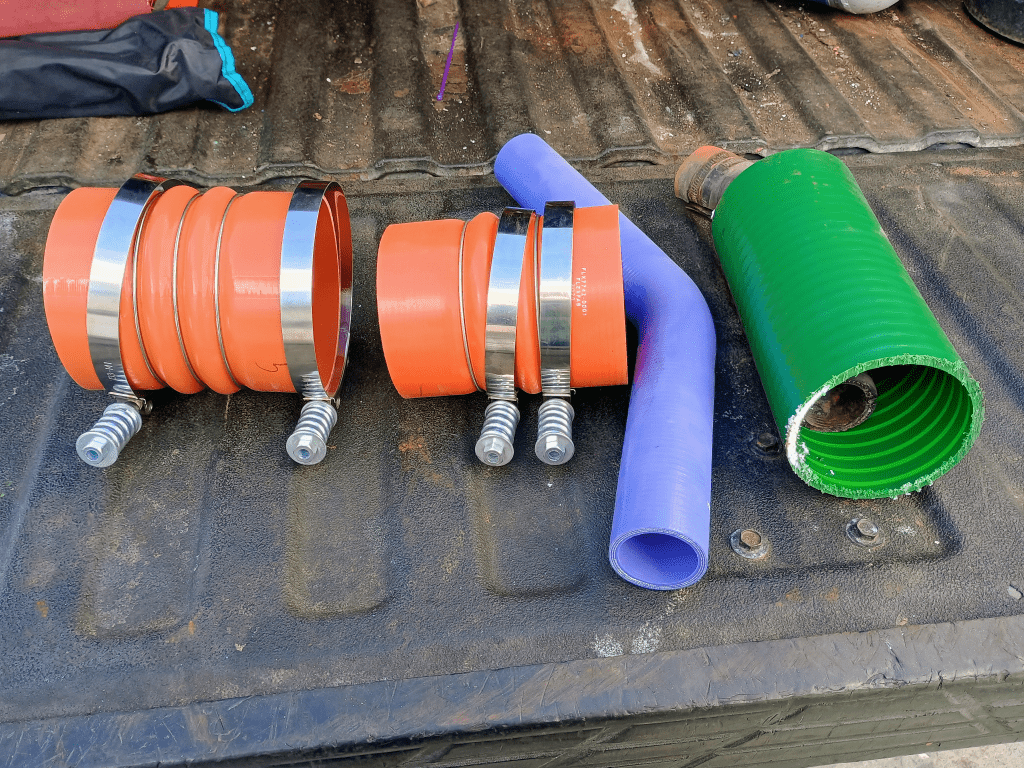
High-temperature silicone marine wet exhaust hoses and torque compression clamps prepared for Detroit Diesel 8V53T exhaust installation.
The new silicone exhaust hose and compression clamp setup improves sealing, heat resistance, and long-term serviceability. On older vessels, hose upgrades also help prevent failures that may otherwise be mistaken for engine overload, surging at cruise RPM, or intermittent performance issues.
After: Final Installation of the New Exhaust System
The completed system was installed with improved routing, new insulation, upgraded couplers, and corrected water injection layout. This restored safe exhaust flow, reduced engine room heat, and eliminated exhaust leakage into the machinery space.
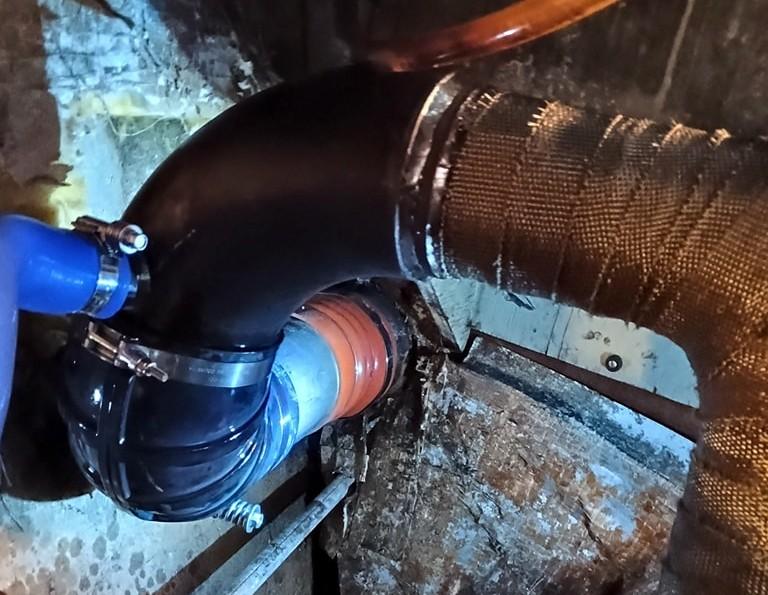
Completed Detroit Diesel 8V53T wet exhaust system installed with fabricated piping, silicone hose, insulation, and improved engine room routing.
The finished installation restored proper exhaust flow and reduced the risk of heat damage, exhaust leakage, seawater backflow, and engine-room contamination. Any Detroit Diesel exhaust restoration should be followed by sea trial verification, temperature checks, and performance comparison using engine survey diagnostics where applicable.
- Correct exhaust flow and scavenging restored
- Engine room heat reduced
- Exhaust odor and leakage eliminated
- New hose and insulation installed
- Cooling system concerns identified and corrected
Why This Project Matters for Older Detroit Diesel Engines
Legacy Detroit Diesel engines can remain reliable for decades when the surrounding support systems are maintained. Exhaust, cooling, fuel, and airflow systems all affect engine life. A strong engine can still be damaged by a failed exhaust pipe, clogged exchanger, or weak seawater pump.
For owners deciding whether to restore, rebuild, or replace older Detroit Diesel platforms, this type of project should be evaluated together with engine beyond rebuild indicators and repower vs rebuild decisions.
External Authority Resources
Detroit Diesel Official |
Caterpillar Marine Systems
Detroit Diesel 8V53T Exhaust Restoration — FAQ
1. Why did this Detroit Diesel 8V53T exhaust system fail?
2. Is a perforated wet exhaust pipe dangerous?
3. What causes wet exhaust corrosion on marine diesels?
4. How often should Detroit Diesel exhaust systems be inspected?
5. Can exhaust restriction cause overheating?
6. Can failed exhaust systems cause engine damage?
7. Why was the heat exchanger inspected during this exhaust job?
8. What happens when a seawater pump fails?
9. Why use silicone wet exhaust hose?
10. Can a bad exhaust system affect turbo performance?
11. What is exhaust backpressure?
12. Can water intrusion happen through the exhaust?
13. Why does insulation matter on wet exhaust piping?
14. Should old steel exhaust systems be replaced proactively?
15. Can exhaust leaks create engine room corrosion?
16. Why inspect cooling and exhaust together?
17. Can a wet exhaust failure cause smoke changes?
18. Is stainless steel better for marine exhaust fabrication?
19. When should I schedule Detroit Diesel exhaust service?
20. What is the best diagnostic approach for old wet exhaust systems?
805 Marine Diesel Mechanic provides Detroit Diesel exhaust restoration, wet exhaust inspection, cooling system diagnosis, heat exchanger service, seawater pump troubleshooting, and mobile marine diesel diagnostics throughout Ventura, Oxnard, Channel Islands Harbor, and Santa Barbara.